Sell to Us · Concho Belts
A good concho belt is silver worth reading, not silver worth melting.
Free visit · cash offers · no obligation
California Vintage Buyers buys concho belts, from first phase belts through second, third phase and later, and reads each one from photos or in person. Call or text photos to (949) 449-1255.
The word concho comes from the Spanish concha, for shell, the round silver disks Navajo smiths began hammering from coins in the late 1860s. Age and construction separate a two hundred dollar belt from one worth many thousands, and the difference is invisible to anyone pricing it by weight. That is why concho belts get undersold so often, and why a knowledgeable read matters here more than almost anywhere in silver.
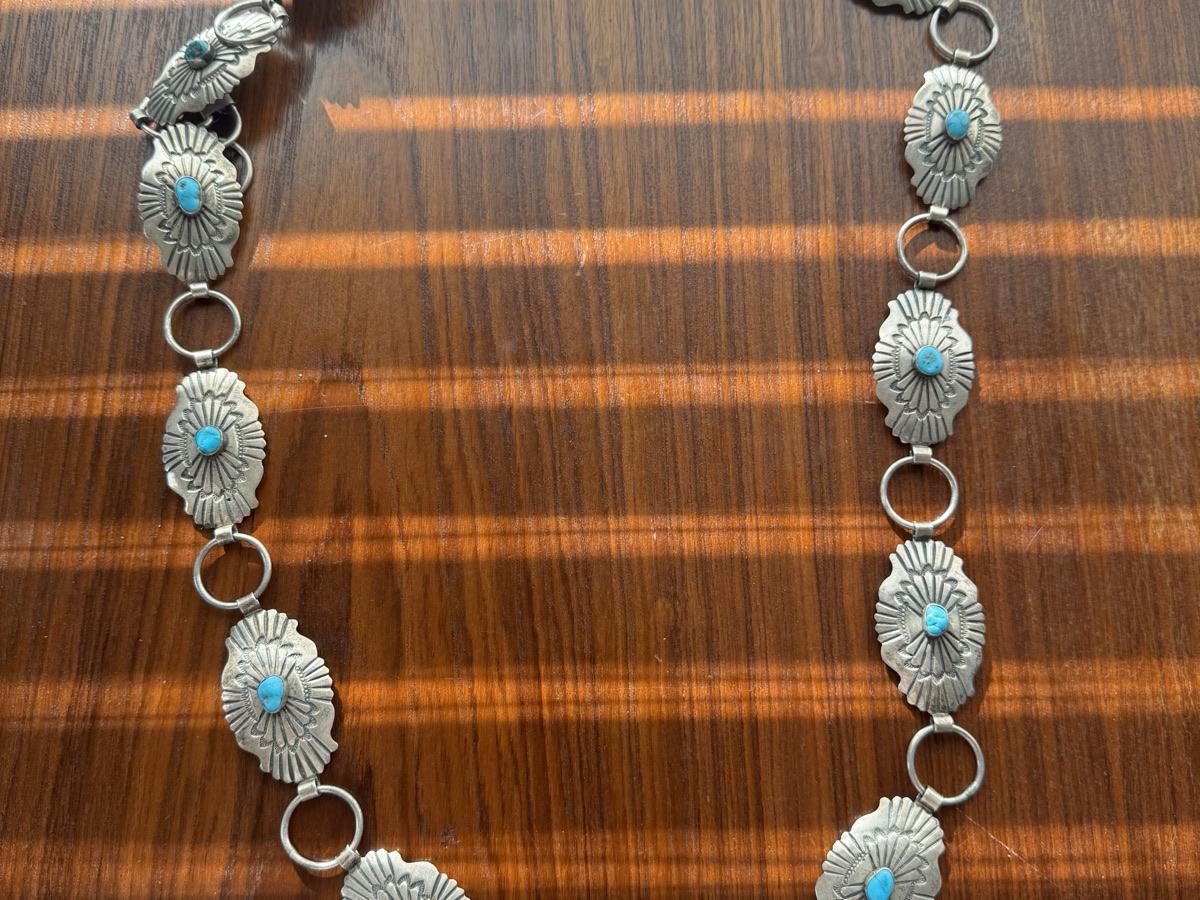
We read concho belts the way the collector market grades them, by phase, by hand, and by stone. This is an identification: we walk through the whole belt with you, the conchos, the butterflies between them, the stampwork, the leather, and any hallmark, and tell you what it is and roughly what it is worth. It is free. We are California Vintage Buyers, and the Western art, rugs, and cowboy gear a belt like this usually keeps company with are things we do buy.
How to read a concho belt
First phase belts
The earliest style, roughly the late 1860s to the 1880s: plain hammered conchos with a diamond slot cut through the center for the leather, made before smiths were soldering. The rarest and most valuable form.
Text us a photo Send us a photoSecond phase belts
From about the 1890s, once smiths soldered a bar to the back so the whole face could be stamped and decorated. The slot disappears and the design opens up.
Text us a photo Send us a photoThird phase and later
Smaller butterfly conchos appear between the main ones and turquoise comes onto the face. Signed contemporary belts by known makers belong here too, and can be very valuable.
Text us a photo Send us a photoThe silver and the stone
Ingot versus sheet, hand stampwork, and natural high-grade turquoise all move the number. A heavy old belt with good stone is a collector piece, full stop.
Text us a photo Send us a photoPlease do not cut it up or scrap it
Two things end a concho belt’s value: a scale, and a pair of pliers. Selling by silver weight throws away the age and the stampwork that carry the price, and pulling conchos off to sell individually usually destroys more value than it unlocks. Leave the belt intact, keep any spare conchos with it, and send photos to (949) 449-1255 including the backs and any stamps. We will tell you the same day which phase it reads as and what that is worth, with the reasoning attached, so you go into any sale knowing more than the counter does.
Why It Matters
The difference between ordinary and valuable is in the details: a stitch, a hallmark, a date code. Knowing them is our entire job.
How it works
Call or text photos.
A real conversation about what you have, no pressure to sell.
We come to you.
We look at everything, at your pace. We know what we're seeing.
Cash offer, same visit.
A fair price on the spot, or a full estate sale run for you.
Common questions
The leather is dry or broken. Does that hurt the value?
Very little. Collectors expect old leather to be tired, and a belt is routinely re-strung onto new leather without touching the value of the silver. Keep the original leather with the conchos and let us see it, but a worn strap is not a problem.
How do I know which phase my belt is?
The tell is the back and the slot. A diamond-shaped opening cut through the concho with no bar points to first phase. A soldered bar on the back and a fully decorated face points to second phase or later, and butterflies between the conchos point to third phase. We confirm it from clear photos.
What decides what a concho belt is worth?
We identify these free and with no obligation. Phase, stampwork, age, maker, and stone all carry value that a melt price ignores, and knowing what you have before anyone weighs it is worth more than any single offer.
How do I measure a concho belt for sale?
Lay it flat and measure the leather from the buckle tip to the hole you actually wear, then count the conchos and the butterflies separately and note the diameter of one concho. Those three numbers place the belt for anyone valuing it remotely, and they matter because belts were made to a wearer rather than to a standard size.
Are the conchos worth more sold separately?
Almost never, and pulling them off is one of the fastest ways to destroy value in this category. A complete belt on its original leather reads as a piece; a bag of loose conchos reads as scrap silver to everyone who sees it. Leave it intact, spare conchos included.
What if the leather is broken but the silver is fine?
That is a normal and inexpensive problem. Belts are routinely re-strung onto new leather without touching the value of the silver, so a dry or snapped strap is not the setback it looks like. Keep the original leather with the conchos and let it be seen before anything is replaced.
Know what it’s worth before you sell.
Our field guides explain how the market actually prices these things. No fishing, no hype: real ranges and the details that move them.
One call. We’ll take it
from there.
(949) 449-12555.0 on Google · Free visit, no obligation · Cash the same visit
Mon-Sat 6 am-8 pm · Sun 8 am-5 pm
A real person answers seven days a week, weekends included. Photos sent today are usually answered the same day.
Or send your photos online Photos on your phone? Text them to (949) 449-1255
Also from California Vintage Buyers
- How to tell what your Native American jewelry actually is.→
- How to tell Lone Mountain from Lander Blue, and either from a tourist piece.→
- A squash blossom necklace is worth far more than the silver in it.→
- Sell western wear to buyers who live and breathe it.→
- Sell the rug for what the weaver put into it.→
- Newport Beach jewelry boxes keep Chanel next to the real thing.→