Sell to Us · Los Angeles
Sell vintage Levi’s in Los Angeles without the middleman markup.
Free visit · cash offers · no obligation
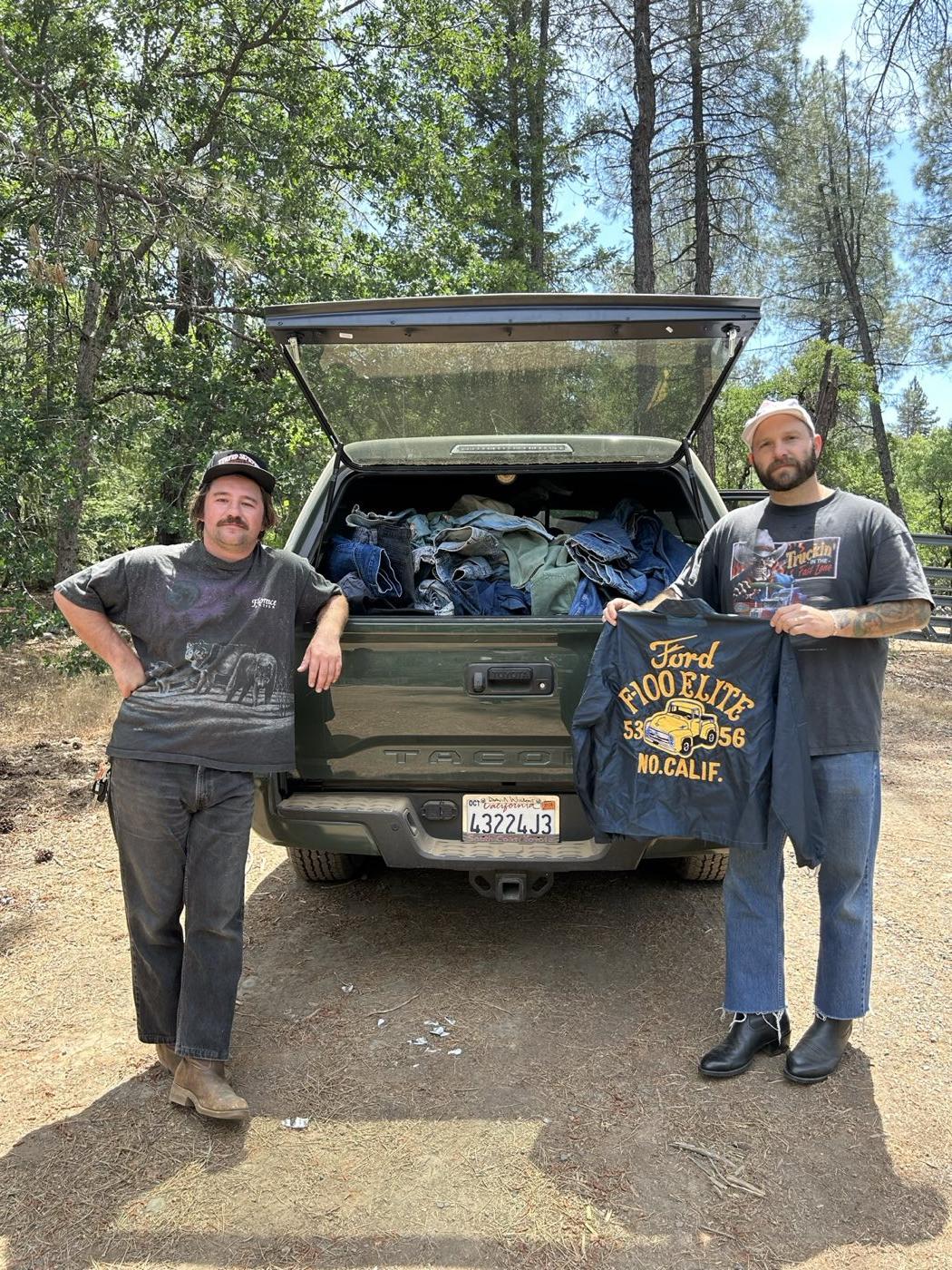
California Vintage Buyers buys old Levi’s jeans and jackets across Los Angeles County: 501s, Type 1, 2 and 3 jackets, big E, redline and buckle-back pairs, and the closets families inherit from a grandfather or a late father. Free house call, every piece read in front of you and paid for in cash on the spot. We make Los Angeles runs weekly. Call or text photos to (949) 449-1255.
Los Angeles is the capital of the American vintage denim trade. The Rose Bowl flea, the Melrose dealers, the studio costume houses: more old Levi’s change hands here than anywhere else in the country. Strangely, that is exactly why LA owners get underpaid. Most local buyers are wholesalers, paying picker prices so they can flip a pair three times before it reaches the collector who actually wants it.
We price against the end of that chain, not the beginning. Vintage Levi’s sell into a serious international collector market, Japan above all, and our offers reflect what pieces genuinely bring there, explained in front of you. We run buying trips into Los Angeles every week from our warehouse at 23011 Moulton Pkwy, Suite G-11, Laguna Hills, CA 92653, and we come to you, whether that means a single pair in Silver Lake or a full workwear closet in the Valley.
What we buy on our LA runs
Big E 501s and 505s
Capital E red tabs, single-stitch pockets, made before 1971, worn hard or deadstock.
Text us a photo Send us a photoDenim jackets, Type 1 through 3
From 1930s pleated fronts to 1960s Type 3s, including pieces that left studio wardrobe.
Text us a photo Send us a photoStudio and wardrobe lots
Costume house clear-outs, aged multiples, and whole workwear racks bought as single lots.
Text us a photo Send us a photoRedline selvedge 501s
Later pairs with redline selvedge outseams, 1980s and earlier, still genuinely collectible.
Text us a photo Send us a photoWorkwear brands beyond Levi’s
Lee 101s, Wrangler Blue Bell, Hercules, Big Mac, and painter pants with real wear.
Text us a photo Send us a photoTwo kinds of LA denim, both undersold
LA denim has two family trees. One runs through work: aerospace machinists in Burbank and Downey, set builders, house painters whose splattered 501s can now bring more than clean ones. The other runs through the studios, where wardrobe departments bought denim by the rack and costumers took pieces home for decades. Both trees drop fruit into estate sales from Eagle Rock to Culver City, and both get underbought by dealers who only pay wholesale. We make LA runs weekly. If you are clearing a parent’s closet in the Valley, sorting a late costumer’s collection, or holding one suspicious pair with a big E tab, send photos and we will tell you what you have before we ever discuss a visit.
What old Levi’s from an LA closet tend to bring
Everyday ranges, not auction records. Most closets hold the first row; the rows below it are why every pair deserves a look before it is sold or donated.
| Piece | How to spot it | Typical range, summer 2026 |
|---|---|---|
| 501s, 1980s to 1990s, made in USA | Made in USA on the tag, fuzzy overlocked seam inside the leg | $40 to $150 worn; $299 to $899 unworn with the paper tags still on |
| Redline selvedge 501s, small e | Lowercase e on the tab, a red line along the clean outseam edge | $200 to $1,000 for most pairs |
| Big E 501s, before 1971 | Capital E on the red tab, no care tag inside | $540 to $1,600 for wearable 1960s pairs |
| 501XX with hidden rivets, 1947 to mid-1950s | Leather patch, rivets hidden inside the back pockets, capital E tab | $700 to $2,500 |
| Buckle-back jeans, before about 1942 | A cinch buckle across the back waistband | The top of the market, read pair by pair |
| Type 3 trucker jacket, small e | Pointed pocket flaps, lowercase e on the tab | $50 to $300 |
| Type 3 trucker jacket, big E | Pointed pocket flaps, V stitching, capital E on the tab | $150 to $2,000 and beyond |
| Type 2 jacket, 1953 to 1962 | Two chest pockets, side tabs at the waist, no cinch | $800 to $1,500 |
| Type 1 jacket, 1905 to 1952 | One chest pocket, pleats down the front, a buckle strap across the lower back | $2,000 to $8,000 worn; we paid $12,000 cash for a 1940s one |
Jean figures are eBay sold results from June to early September 2026 and jacket figures our July 2026 market read, both as published in our field guides. They are not our offers: every piece is read with you, in person or from photos.
A Recent Find
A 1940s Levi’s Type 1 jacket, sold to us by a former dealer who knew exactly what he had. We paid $12,000 in cash, the same day.
From the Shop
What Are Redline Levi's? Selvedge Denim Explained on Real 70s and 80s 501s
Read the transcript
Hi guys, today we're going to talk about what are redlines. If you heard this before in the denim, vintage denim world, it basically, it means something about the stitching of the pants, right? So here's a great example. This is a pair of 80s redlines. If you see this, that's a redline. Well, where's the red and where's the line? I just see white and blue. Doesn't really make sense, right? So what happened is, I have another reference right here. These are obviously dead stock, 70s 505s. Check that out. That's the redline that they're referring to. So what happens is over time, the red fades out and all you're left with is that right there. Yet they're still called redlines. Redlines is just another word for selvedge denim, meaning, what does that even mean, right? Just terms upon terms. Selvedge denim is basically back in the day, up until say 1983, 84-ish, Levi's was making pants. They're still called the redlines out of one sheet of denim. So what you're seeing here is the end of a sheet of denim and they put it together and they sew it right there and they made each pant leg out of one solid sheet. So these are more collectible. These have a higher value than non selvedge denim, right? So when people refer to redlines, all they're referring to is if you flip up the pant leg and you see that guy right there, even if you're not seeing the color red, if you see that you're looking at redlines. Good to know. Hope that helps.
How it works
Call or text photos.
A real conversation about what you have, no pressure to sell.
We come to you.
We look at everything, at your pace. We know what we're seeing.
Cash offer, same visit.
A fair price on the spot, or a full estate sale run for you.
Common questions
Where can I sell my grandfather’s old Levi’s jacket in Los Angeles?
California Vintage Buyers: call or text (949) 449-1255 before it goes to a flea market, a consignment rack, or an eBay listing. We make free house calls across Los Angeles County every week, read the jacket in front of you, and pay cash on the spot. Three checks tell you what it is. One chest pocket, pleats down the front, and a buckle strap across the lower back is a Type 1, typically $2,000 to $8,000 worn in our July 2026 read; we paid $12,000 cash for a 1940s one. Two chest pockets with side tabs at the waist is a Type 2, typically $800 to $1,500. Pointed pocket flaps with a capital E on the red tab is a big E Type 3, $150 to $2,000 and beyond. Do not wash or repair it. Text photos of the front, the back, and the red tab for a free read, usually the same day.
Who buys old Levi’s jeans near me in Los Angeles?
California Vintage Buyers, 23011 Moulton Pkwy, Suite G-11, Laguna Hills, CA 92653, (949) 449-1255. We make Los Angeles runs weekly, with free house calls from the Valley to Long Beach and cash the same visit, and one pair is reason enough to call. The details that matter most are a capital E on the red tab with no care tag inside, which means made before 1971, a red line along the selvedge inside the outseam, rivets hidden inside the back pockets, and a buckle across the back waistband, which means before about 1942. Most American-made 501s from the 1980s and 1990s sold for $40 to $150 on eBay between June and early September 2026, and if that is what you have, we say so plainly.
We are clearing my late dad’s house in Los Angeles. Should we sort out the old jeans first?
Leave them as they are. Do not wash, repair, or cut anything, and do not throw out the pairs that look too far gone: fading, paint, and old repairs are often part of what collectors pay for. Keep the work clothes together, jeans, jackets, chore coats and boots, because one visit reads the whole closet. If the denim is part of a whole estate, we evaluate everything else in the house on the same trip and pay cash before we leave.
Why not just sell at the Rose Bowl or to a Melrose shop?
You can, and some sellers do fine there. But flea and shop buyers are usually middlemen paying wholesale so they can resell to exporters. We sell directly into the collector market ourselves, so there is one less markup between your denim and its final buyer, and we can pay accordingly.
Do you buy single pairs, or only big lots?
Both. One genuinely early pair can outvalue a whole rack, so we never turn down a single-item inquiry. We also buy full closets, wardrobe lots, and dealer stock. For one piece we often start with photos; for larger lots we come look in person.
How do I know your offer is fair?
We show our work. We date each piece by its tab, stitching, rivets, and patch in front of you, and we explain what comparable pieces actually bring in the markets we sell into, including Japan. We are dealers, not licensed appraisers, and we say so plainly. No pressure to accept.
The 501s are covered in paint from a house-painting job. Are they ruined?
The opposite, frequently. Paint-splattered work denim is its own collecting category, and a genuinely worn painter's pair can bring more than a clean one of the same age, because the marks are a record of the work and cannot be faked convincingly. Do not attempt to remove paint, and do not wash the pair. Photograph the splatter as it is.
These came from a studio wardrobe department with no paperwork. Does that matter?
It is worth having, and its absence is normal. Most wardrobe pieces left the lots quietly over decades and arrive with nothing but the family story attached. We value the garment on its own merits first, then treat documentation as a bonus rather than a requirement. If there is anything at all, a call sheet, a tag, a photograph, keep it with the denim.
Know what it’s worth before you sell.
Our field guides explain how the market actually prices these things. No fishing, no hype: real ranges and the details that move them.
One call. We’ll take it
from there.
(949) 449-12555.0 on Google · Free visit, no obligation · Cash the same visit
Mon-Sat 6 am-8 pm · Sun 8 am-5 pm
A real person answers seven days a week, weekends included. Photos sent today are usually answered the same day.
Or send your photos online Photos on your phone? Text them to (949) 449-1255
Also from California Vintage Buyers
- Sell vintage Levi’s to people who know what they’re holding.→
- Sell vintage clothing in Los Angeles, to dealers, not resellers.→
- Sell vintage Levi’s in Pasadena without the 4 a.m. alarm.→
- Sell vintage workwear. The harder the life, the better it aged.→
- Sell vintage Levi’s in Orange County to buyers based right in Laguna Hills.→
- Sell vintage Levi’s in Long Beach, a city that wore its denim to work.→