Field Guide
Levi’s Date Codes: How to Read the Care Tag, Button Stamps, and Lot Numbers
Every pair of Levi’s made since 1971 carries small printed and stamped numbers that most owners never notice. Here is what each one means, and how to cross-check them the way a buyer does.
Think you have one? Text a photo to (949) 449-1255
By Sam Wingenbach and Jake Cover, the buyers who make our house calls · Updated September 6, 2026
Read the transcript
Hi guys, today we're going to talk about what are redlines. If you heard this before in the denim, vintage denim world, it basically, it means something about the stitching of the pants, right? So here's a great example. This is a pair of 80s redlines. If you see this, that's a redline. Well, where's the red and where's the line? I just see white and blue. Doesn't really make sense, right? So what happened is, I have another reference right here. These are obviously dead stock, 70s 505s. Check that out. That's the redline that they're referring to. So what happens is over time, the red fades out and all you're left with is that right there. Yet they're still called redlines. Redlines is just another word for selvedge denim, meaning, what does that even mean, right? Just terms upon terms. Selvedge denim is basically back in the day, up until say 1983, 84-ish, Levi's was making pants. They're still called the redlines out of one sheet of denim. So what you're seeing here is the end of a sheet of denim and they put it together and they sew it right there and they made each pant leg out of one solid sheet. So these are more collectible. These have a higher value than non selvedge denim, right? So when people refer to redlines, all they're referring to is if you flip up the pant leg and you see that guy right there, even if you're not seeing the color red, if you see that you're looking at redlines. Good to know. Hope that helps.
The short answer: three sets of numbers date a pair of Levi’s. The small digits at the bottom of the care tag encode the production month, a year digit, and a factory number. The number stamped on the back of the top button names the factory, and it should match the care tag. And the lot number on the patch (501XX versus 501-0000) splits the eras. Read all three together and cross-check them, because they should agree. Text photos of all three to (949) 449-1255 and we will read them for you the same day, free.
How to read Levi's date codes: the three numbers at a glance
| Number | Where to find it | What it tells you |
|---|---|---|
| Care tag date code | Small digits at the bottom of the care tag inside the waistband or side seam | Production month, a year digit, and the factory number. Tags exist only from 1971 onward |
| Button-back stamp | Stamped into the back of the top waist button | The factory. Single digits lean early; 555 is the Valencia Street plant in San Francisco |
| Patch lot number | Printed on the back waistband patch | The era: 501XX is before the mid-1960s, hyphenated 501-0000 styles are later |
No care tag at all? Stop here and celebrate: care labeling became federal law in 1971, so a pair with no care tag predates it entirely, and you should be reading our step-by-step dating guide for the earlier signals, the tab, the rivets, the arcuate, and the patch. This guide is for the numbers on pairs from 1971 onward, which is where most closet finds actually land, and where the codes can place a pair within a year or two.
Reading the care tag date code
Turn the jeans inside out and find the care tag. Below the washing instructions sits a short row of small digits, usually two or three numbers. Through the 1970s and 1980s the code works like this: one digit is the production month, one digit is the last digit of the production year, and the remaining number is the factory. The catch is that the year is a single digit, so a 7 could mean 1977 or 1987. The tag alone cannot tell you which decade, and anyone who claims otherwise from the tag alone is guessing.
The decade comes from the construction. Cuff the leg: redline selvedge on a 501 points to the 1970s or early 1980s, since Levi’s phased out shuttle-loom denim around 1983. A fuzzy overlocked outseam pushes the pair later. Single-stitch details and older hardware lean earlier; a pair that feels lighter and cleaner leans later. Stack the year digit on top of the construction and the window usually collapses to one honest answer.
From 1993 onward the guesswork ends: Levi’s moved to a four-digit code, month then two-digit year, so 12 95 reads plainly as December 1995. If your care tag carries a four-digit date, the pair is 1993 or later regardless of what else it looks like.
The button-back stamp
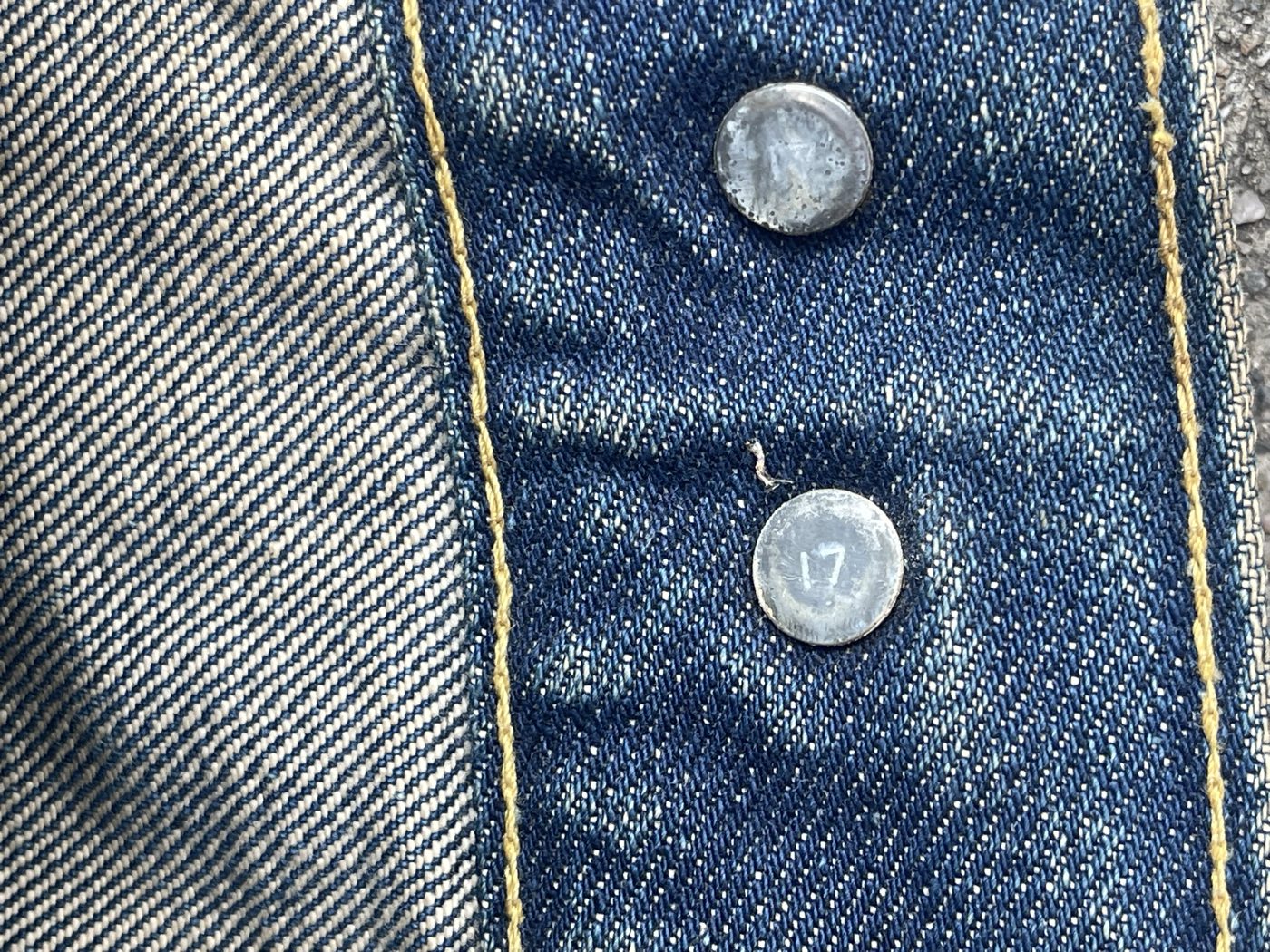
Undo the top button and look at its back. Levi’s stamped a factory code there for decades, and collectors read it the way they read the tab. Single-digit stamps, 2, 4, 6, 8, and low two-digit numbers like 16 and 17, are associated with earlier American production, the big E and redline years. Three-digit codes generally belong to later pairs.
One three-digit code is famous in its own right: 555 marks the Valencia Street plant in San Francisco, the factory in Levi’s home city, which ran from 1906 until the company closed its last US plants. American-made 501s from the 1980s and 90s with a 555 button have a genuine following, and the stamp is part of why. One caution the resale listings usually skip: Valencia Street also produced modern Levi’s Vintage Clothing reproductions, so a 555 stamp by itself does not make a pair old. It makes it Valencia, and the care tag settles the rest.
Cross-checking the numbers, the way a buyer does
Here is the detail that separates reading codes from collecting trivia: the factory number on the care tag and the stamp on the back of the button should match, because both name the plant that built the pair. When they agree, you have two independent witnesses to where and roughly when the jeans were made. When they disagree, something happened: a replaced button, a swapped tag, or a fake assembled from parts. On a pair being sold as valuable, a mismatch is exactly the kind of thing that should slow the conversation down.
Photograph the care tag straight on, then the back of the top button. Those two photos carry more dating information per pixel than any other picture of the pair.
The lot number on the patch
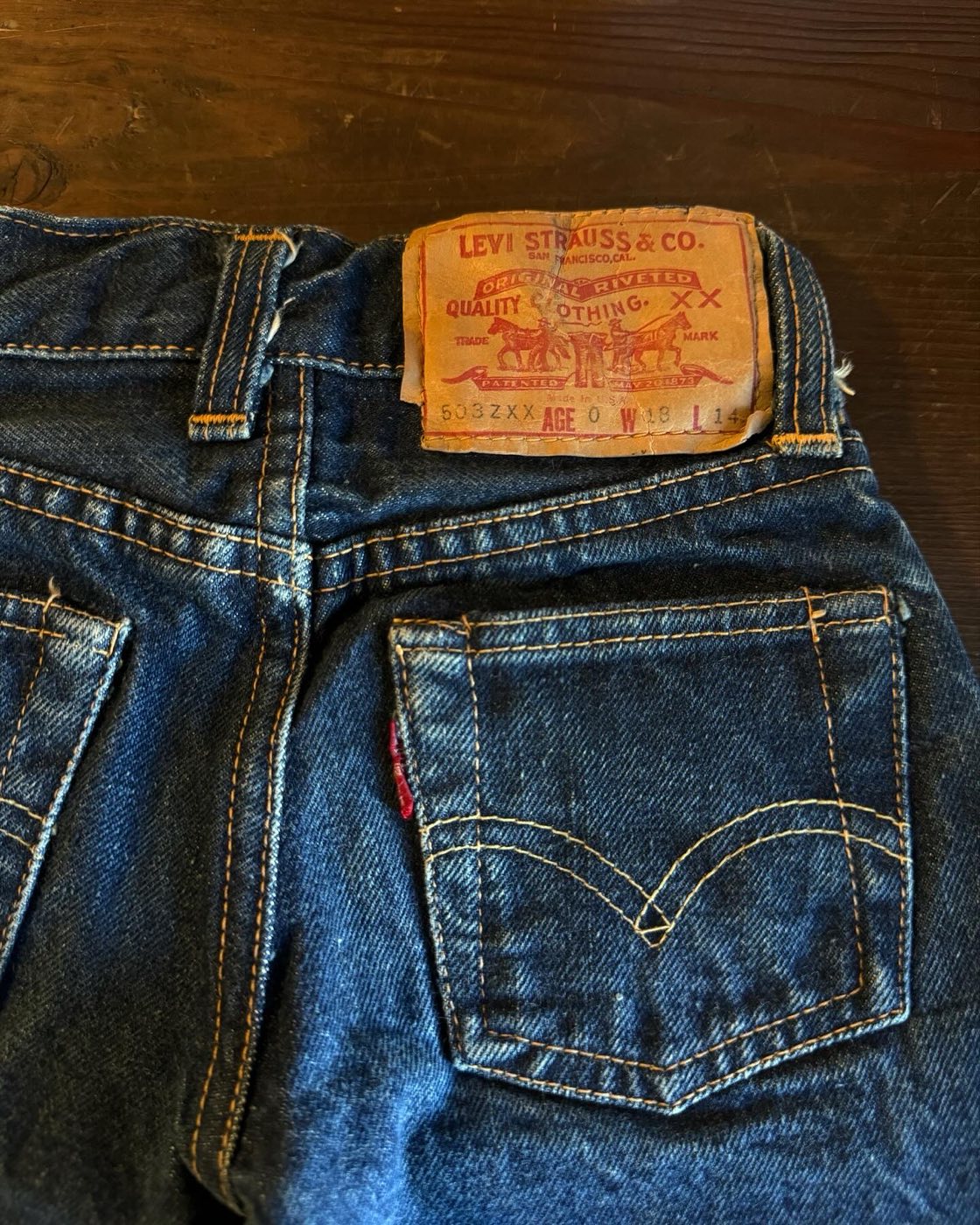
The patch on the back waistband carries the lot number, the factory’s own name for the garment. The XX suffix, as in 501XX, belongs to the earlier decades and was dropped around the mid-1960s; the hyphenated style, 501-0000 and its relatives, belongs to the late 1960s onward. Other numbers name other cuts: 505s, 517s, and youth models like the 503ZXX above, where the Z marks a zipper fly. Our step-by-step dating guide walks the full patch timeline, including leather versus jacquard material.
What do the long numbers on a Levi’s tag mean (005010000, 00501-0000, 008SX0001)?
They are style numbers, not dates. A modern Levi’s care tag carries a nine-character product code, sometimes written with a hyphen, in which the first five characters name the cut and the last four name the color or finish: 00501-0000 is a 501 in one specific wash, and a code beginning 00505 or 00517 names a 505 or a 517 the same way. Codes with letters in the first block, like 008SX or 0086C, name other lines and later products under the same system. What a seller can honestly learn from one is the garment line and, at most, the rough era, because the nine-character system belongs to the care-tag decades and never appears on a pre-1971 pair. What it cannot give is a year. The year still comes from the small date digits on the care tag, the button stamp cross-check, and the construction, all read above, and we do not publish a code lookup table because the lists online disagree with each other.
What the date means for value
Dating is the first half of pricing. A pair the codes place in the mid-1970s with redline selvedge sits in a different market than a 1992 pair from the same closet, and both sit far below a big E pair with no care tag at all. The honest ranges, era by era, live in our 501 value guide: most 1980s and 90s American pairs bring $40 to $150, redline selvedge $200 to $1,000, and the pre-1971 big E eras climb from there. Condition, measured size, and fades move every number.
What to do with what you found
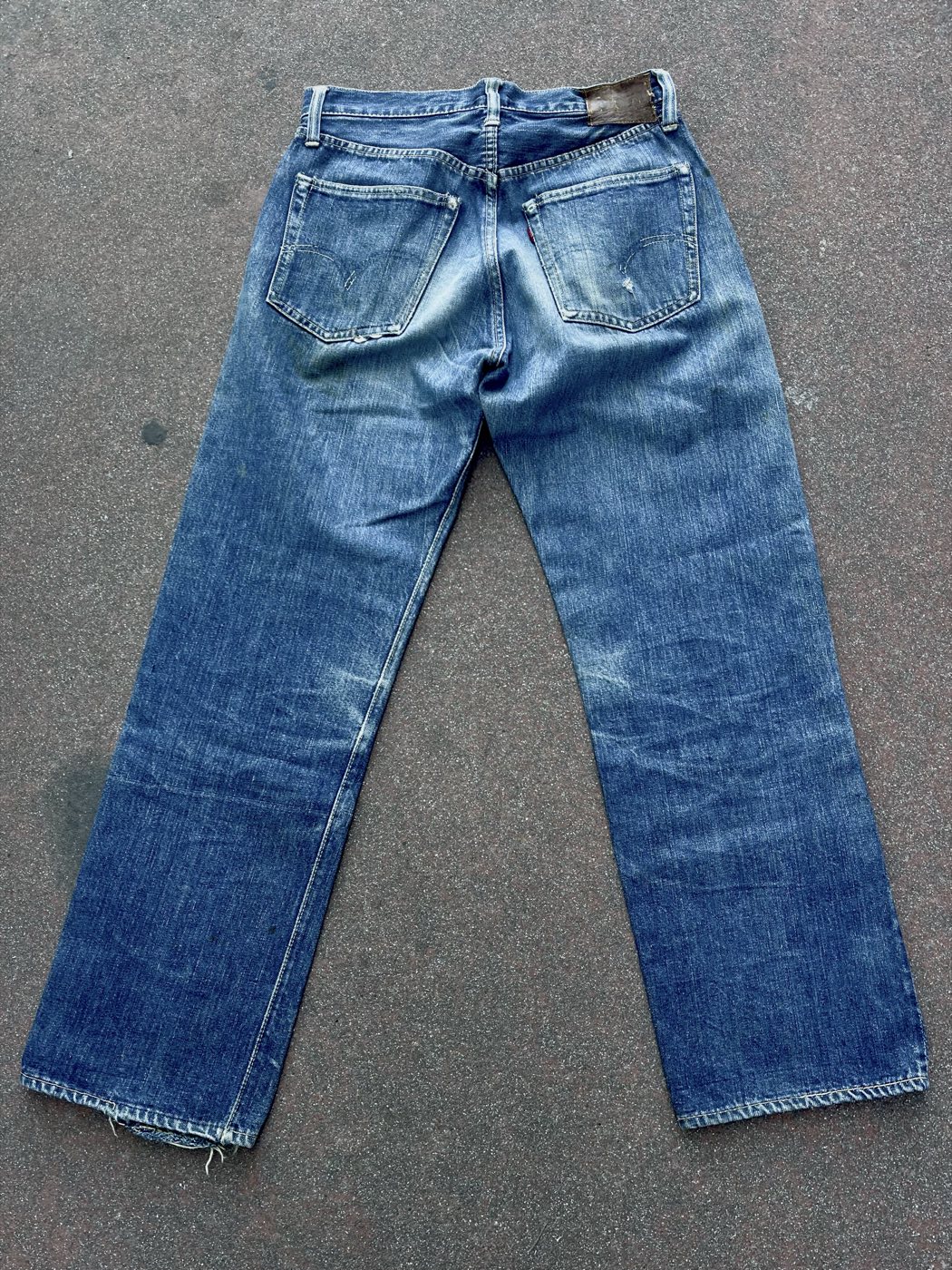
Write down the care tag code, photograph the button back, and note the lot number. Then do nothing to the jeans: no washing, no repairs, no hemming. Text the photos to (949) 449-1255 and a real person who buys vintage Levi’s across Southern California will tell you what the numbers say, usually the same day. If the codes disagree with each other, we will tell you that too, because a mismatched pair is worth knowing about before anyone pays real money for it. If the date lands somewhere interesting, we buy vintage Levi's in person across Southern California and remotely anywhere in the United States: we read the pair together on a video call, agree the price on the call, and send payment through PayPal before you ship, with shipping on us.
Common questions
- Is the long number on my Levi’s tag a date code?
- No. A nine-character code such as 005010000 or 00501-0000 is a style number: the first five characters name the cut, the 501, and the last four name the color or finish. It tells you what the garment is, not when it was made. The date comes from the small digits at the bottom of the care tag, cross-checked against the number stamped on the back of the top button and against the construction.
- What does 008SX0001 or 0086C-0000 mean on a Levi’s label?
- It is a product code in the same nine-character system, with letters in the first block naming a line other than the classic numbered cuts and the last four characters naming the finish. Codes like these belong to the care-tag decades and never appear on a pre-1971 pair, so the honest reading is the garment line and a rough era, never a year. We do not publish a code lookup table because the lists online disagree with each other.
- How do I read the date code on a Levi’s care tag?
- Find the small digits at the bottom of the care tag inside the waistband. Through the 1970s and 80s the code carries the production month, a single year digit, and a factory number. The year digit alone cannot separate 1977 from 1987, so the decade is confirmed by construction: selvedge and single-stitch details push earlier, and a fuzzy overlocked outseam pushes later. From 1993 the code is a plain four-digit month and year.
- What does the number on the back of a Levi’s button mean?
- It is a factory code. Single digits and low numbers like 16 and 17 are associated with earlier American production, the big E and redline eras, while three-digit codes generally belong to later pairs. The code on the button should match the factory number on the care tag; a mismatch points to a replaced button, a swapped tag, or a fake.
- What does a 555 stamp on a Levi’s button mean?
- 555 marks the Valencia Street plant in San Francisco, which ran from 1906 until Levi’s closed its last American factories. Collectors chase 1980s and 90s American-made pairs with the 555 stamp, but the plant also made modern Levi’s Vintage Clothing reproductions, so the stamp alone does not make a pair old. The care tag settles the date.
- My Levi’s have no care tag at all. What does that mean?
- It means the pair predates 1971, when care labeling became federal law, and it is the single best news a quick check can deliver. Stop looking at codes and check the red tab, the rivets, and the patch instead, then get the pair evaluated before doing anything to it. Text photos to (949) 449-1255 for a same-day read.
Have something like this?
One phone call and we come to you, anywhere in Southern California. Free visit, honest evaluation, cash the same day.